Key Export Documents
Get to know your key export documents
The Paperwork That Makes Your Car Actually Leave Japan
Exporting a car from Japan isn’t just about bidding, winning, and high-fiving yourself. There’s paperwork. A lot of it. Luckily, once you know what each document does, the process feels less like a treasure hunt and more like simple adulting. These documents prove ownership, track the car’s identity, and convince shipping companies and customs officers that, yes, you really did buy that Skyline or Land Cruiser and you’re not smuggling a mobile sushi bar across borders.
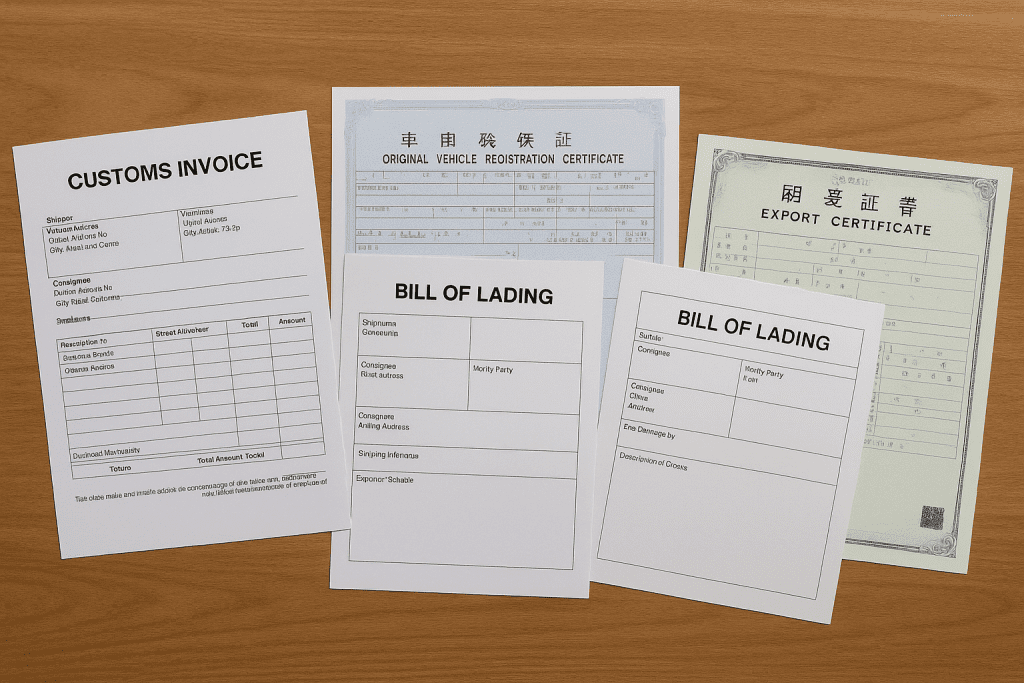
The Export Certificate (The Big One Everyone Talks About)
This is the king of export paperwork. The Export Certificate replaces the Japanese Registration Document and officially states that the vehicle is cleared to leave the country. It shows chassis number, year, engine size, mileage, and previous owner information. Basically, it’s your car’s passport. Without it, nothing moves — not the car, not your shipment, and not your blood pressure.
The Bill of Lading (Your Car’s Ticket Out of Japan)
Once your vehicle is loaded onto the ship, the shipping company issues the Bill of Lading — often called the B/L. This little beauty is your proof that the car is on the ocean and heading your way. It includes vessel name, voyage number, destination port, and consignee details. Lose it and you’ll panic; keep it safe and you’ll sleep like a baby.
The Exporter Invoice & Packing List (The “Everything We’re Sending You” Bundle)
These documents confirm the sale and list what’s inside your shipment — usually just the car, unless you’re shipping extra wheels or rare JDM parts tucked in the boot. Customs at the destination country loves these because it helps them verify declared values and taxes. You’ll love them because they keep everything transparent.
Why All These Documents Matter (Besides Keeping You Out of Trouble)
Each document helps your importer or customs broker avoid delays, fees, or outright cargo rejection. When all paperwork lines up, the process is smooth, the car arrives without drama, and you can focus on the important stuff — showing off your new import or planning your next purchase.