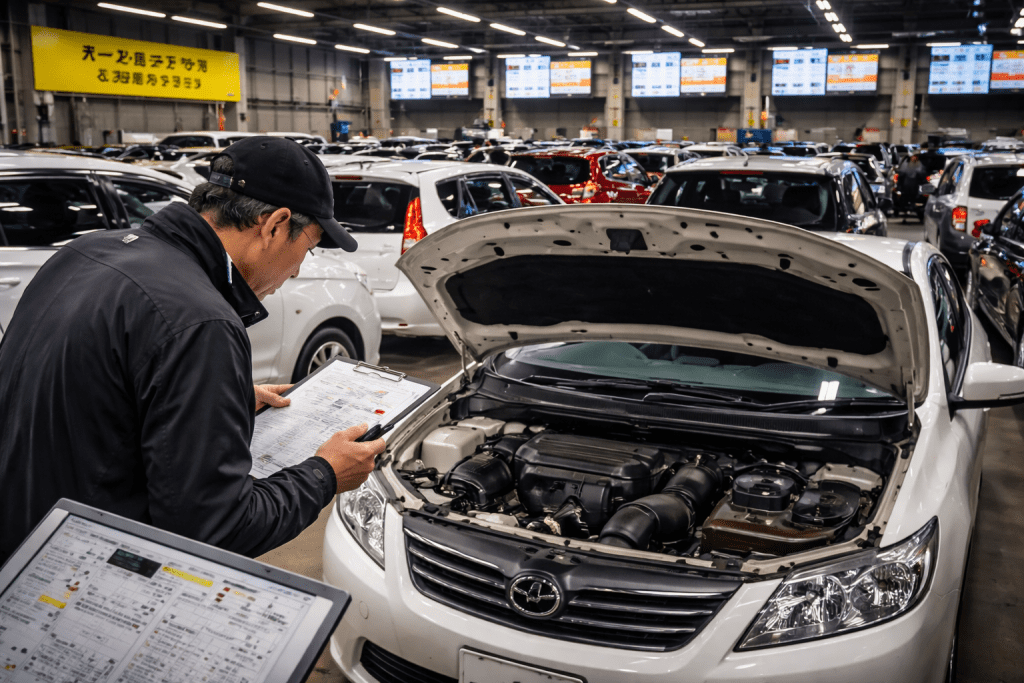
Buying vehicles remotely from Japanese car auctions gives buyers access to a massive inventory of well-maintained cars, often at prices far below local markets. However, the inability to physically inspect or test-drive a vehicle introduces a unique set of risks. High-risk cars are rarely obvious wrecks or junk vehicles. More often, they are cars that appear acceptable on paper but conceal issues that only become apparent after export. Understanding how to identify these risks before bidding is essential for protecting your investment and avoiding costly mistakes.
Understanding Auction Grades Beyond the Headline Number
Auction grades provide a quick reference point, but they are not guarantees of quality or reliability. A higher grade does not mean a vehicle is free from problems, and a lower grade does not always mean it should be avoided. Grades reflect overall condition at a glance, not mechanical health or future reliability. Accident grades such as R or RA indicate previous structural repair and should immediately be treated as higher risk. Even standard grades like 3.5 or 4 can hide repainting, worn interiors, or early mechanical issues. High-risk vehicles often sit in the gap between what the grade suggests and what the details reveal.
Why Inspector Comments Are Critical for Risk Assessment
Inspector comments are one of the most important yet overlooked elements of Japanese auction sheets. Inspectors typically use brief, conservative language, meaning even short notes carry weight. Comments such as engine noise, oil leakage, transmission shock, suspension wear, or abnormal vibration should never be ignored. These remarks often signal developing issues that may worsen after shipping and regular use. High-risk buyers focus on photos and grades, while experienced buyers treat inspector comments as early warning indicators.
Using the Damage Diagram to Spot Hidden Accident History
The damage diagram provides valuable insight into a vehicle’s past. Symbols indicating scratches, dents, waviness, corrosion, or panel replacement help reveal whether damage is cosmetic or structural. A single minor mark is usually low risk, but multiple damaged or replaced panels suggest previous accidents or poor repairs. Panels marked as replaced carry higher risk than repaired panels due to potential alignment issues, compromised corrosion protection, and reduced resale value. High-risk cars often show patterns of repair rather than isolated defects.
Mileage and Condition Consistency Checks
Mileage should always align with the vehicle’s overall condition. Low mileage combined with heavy interior wear, worn pedals, faded steering wheels, or sagging seats is a red flag. While odometer tampering is less common in Japan than in some regions, inconsistencies still occur. Missing service records, unclear ownership history, or documentation that does not match the auction listing increases risk. Any mismatch between mileage and physical condition should slow the bidding process and prompt further verification.
Rust and Undercarriage Risk Often Missed by Remote Buyers
Rust is one of the most underestimated risks when buying from Japanese car auctions. Vehicles from snowy or coastal regions are more prone to underbody corrosion that is rarely visible in standard auction photos. Surface rust may be manageable, but structural rust can affect safety, longevity, and legal registration in many countries. High-risk vehicles often appear clean externally while hiding corrosion underneath, making undercarriage inspections especially important for older cars and those from high-risk regions.
Repeated Auction Listings and No-Sale History
Vehicles that appear repeatedly across multiple auction sessions without selling deserve careful consideration. While some repeated listings are due to high reserve prices, others indicate that experienced buyers identified issues and chose not to bid. High-risk cars often circulate through auctions until a less cautious buyer overlooks the warning signs. Auction history should be interpreted as market feedback rather than automatically viewed as a bargain opportunity.
Mechanical Risk Without the Ability to Test Drive
Remote buyers cannot hear engine knock, feel transmission hesitation, or assess suspension performance. This limitation significantly increases risk, especially for turbocharged engines, hybrid systems, and performance vehicles. Issues that seem minor during inspection can escalate after long-distance shipping and daily use. High-risk buyers assume that a running vehicle is a healthy one, but long-term reliability depends on maintenance history and subtle indicators noted during inspection.
Import Compliance as a Hidden High-Risk Factor
A vehicle can be mechanically sound yet still be high risk if it does not meet the import regulations of the destination country. Emissions standards, safety equipment requirements, age limits, and registration rules vary widely by market. Buyers who bid without confirming compliance often face expensive modifications or discover the vehicle cannot be registered at all. Compliance checks should always be completed before bidding, not after winning the auction.
The Importance of Independent Pre-Bid Inspections
Independent pre-bid inspections reduce risk by providing additional photos, underbody views, and expert commentary beyond the standard auction sheet. While inspections add upfront cost, they often prevent far greater financial loss. High-risk situations frequently involve pressure to bid quickly or reluctance to provide extra inspection information. Transparency and access to inspections are strong indicators of a lower-risk purchase.
Risk-Smart Bidding Leads to Better Long-Term Results
Spotting high-risk cars before you bid is about discipline rather than fear. Successful remote buyers rely on structured evaluation rather than emotion. By understanding auction sheets in detail, respecting inspector comments, reviewing auction history, confirming compliance, and using independent inspections, buyers reduce uncertainty and improve outcomes. In Japanese car auctions, the best deals are rarely the cheapest vehicles. They are the cars with clear histories, realistic pricing, and the fewest unanswered questions.